


Arctic NTO Blue
Arctic NTO Blue
Couldn't load pickup availability
Who it suits
Spec sheet
- Shape
- Diamond
- Weight
- 350–370 g
- Balance
- Head-heavy
- Core (EVA)
- Medium
- Core material
- Multi-EVA
- Material
- 18K Carbon
- Surface
- Matte, rough
- Player type
- Powerful, control
- Damping
- Rubber element in the handle
The shape decides where the sweet spot sits. Round: large and central, forgiving, good for beginners. Hybrid: between round and teardrop, lots of control with a bit more punch. Teardrop: the all-rounder, sweet spot slightly higher. Diamond: sweet spot high up, the most power, needs clean technique.
Lighter rackets (around 350 g) are quicker in the hand and easier on arm and shoulder. Heavier ones (around 370 g) put more mass behind the ball, so more power, but need a bit more strength.
Shows where the centre of mass is. Head-light: agile and easy to handle, ideal at the net. Even: balanced. Slightly head-heavy and head-heavy: more swing and power in smashes, but slower and harder on the arm. Measured in millimetres from the end of the grip; as a rough guide, under 260 mm is head-light, 260 to 270 mm even, above that head-heavy.
The core is the foam under the hitting surface. Soft: the ball stays on the face a moment longer, giving more feel and control and damping vibration. Good for beginners and sensitive elbows. Hard: more direct and faster, returns lots of pace on clean hits, but needs technique and your own swing. Medium sits in between.
The core compound. Black EVA is a separate, usually denser EVA blend; Multi-EVA combines layers of different hardness. How soft the racket feels is shown in the Core (EVA) row.
What the hitting surface is made of. For carbon, the number before the K means thousands of fibres per strand (12K, 18K, 24K). Higher numbers usually feel stiffer and more direct. Full carbon means the face is all carbon, no fibreglass. According to the manufacturer, titanium in the face adds stability and spin.
Rough or textured faces (3D texture, sand texture, micro grain) grip the ball more, so you can add more spin, for example on a slice or bandeja. Smooth matte faces play more neutrally.
Who we recommend the racket for, by level and playing style.
Rated by shape, balance and core.
Our rating for a quick comparison. Character comes from shape and balance, feel from core hardness and the carbon. It does not replace playing the racket.
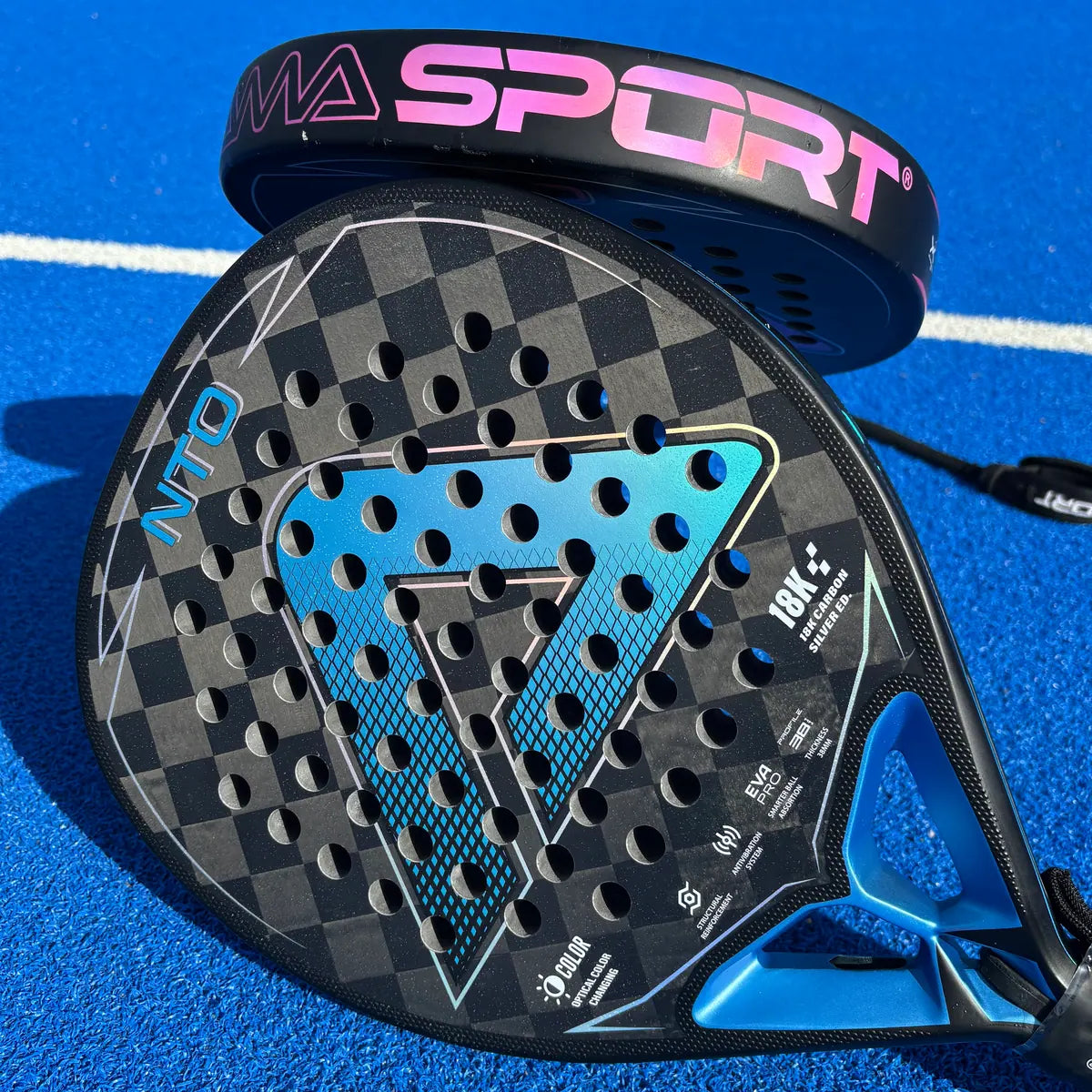
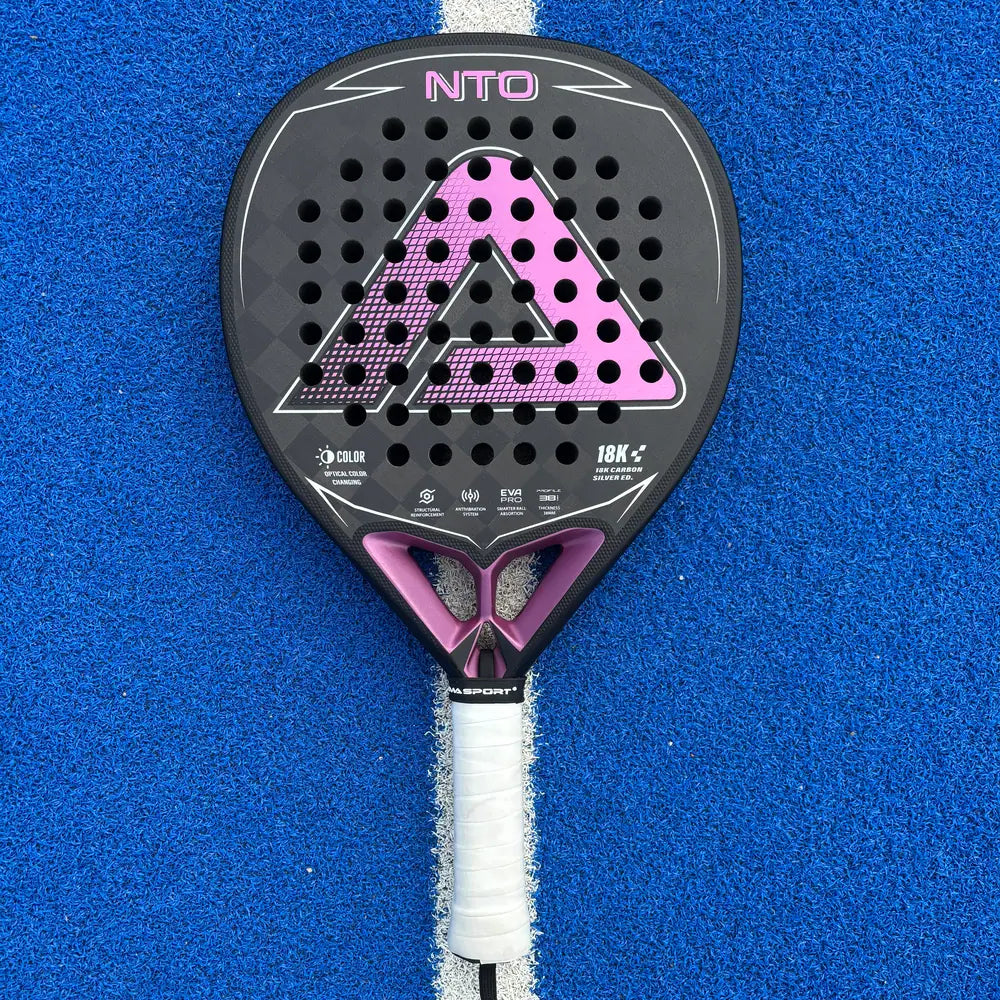
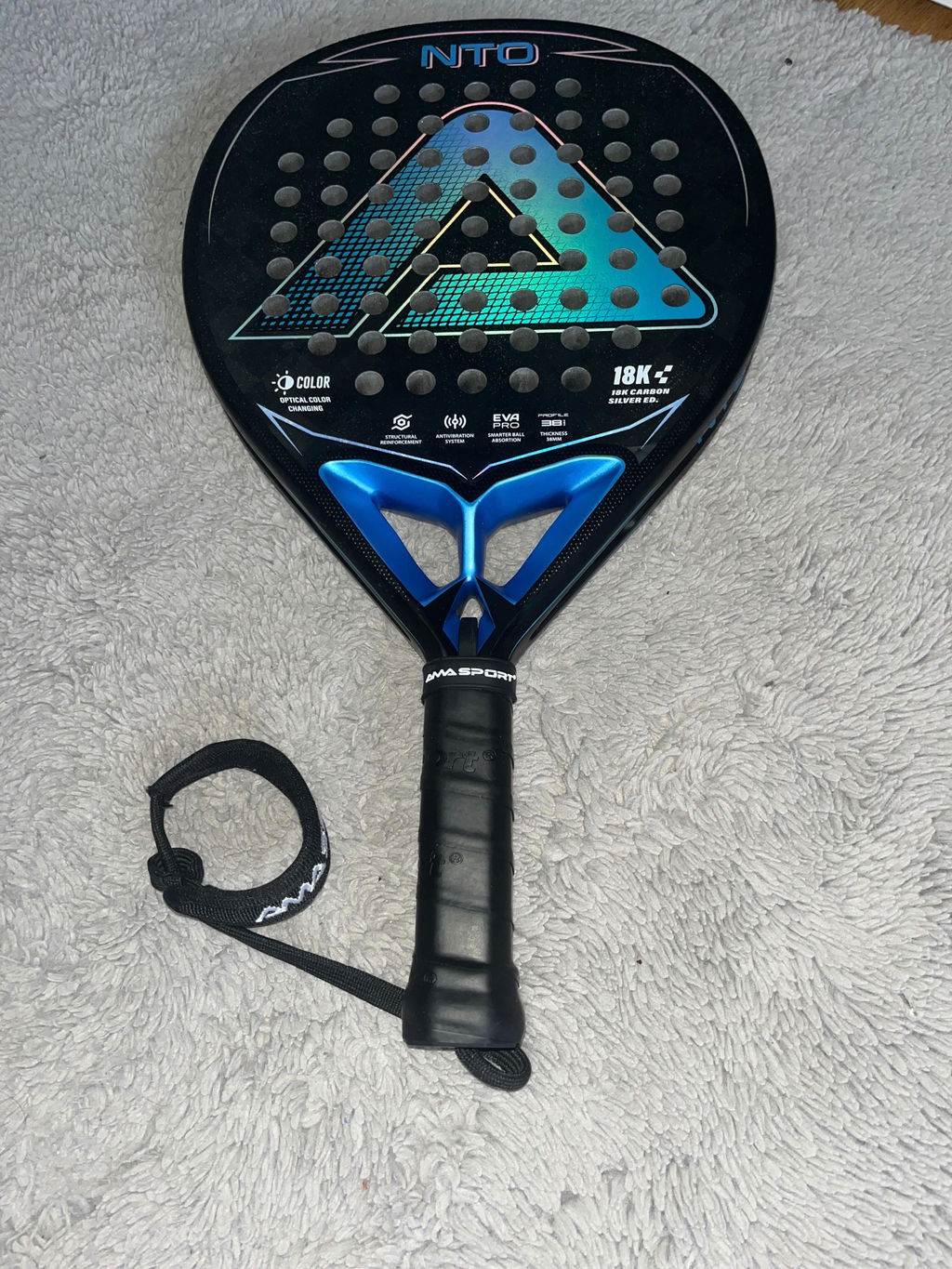
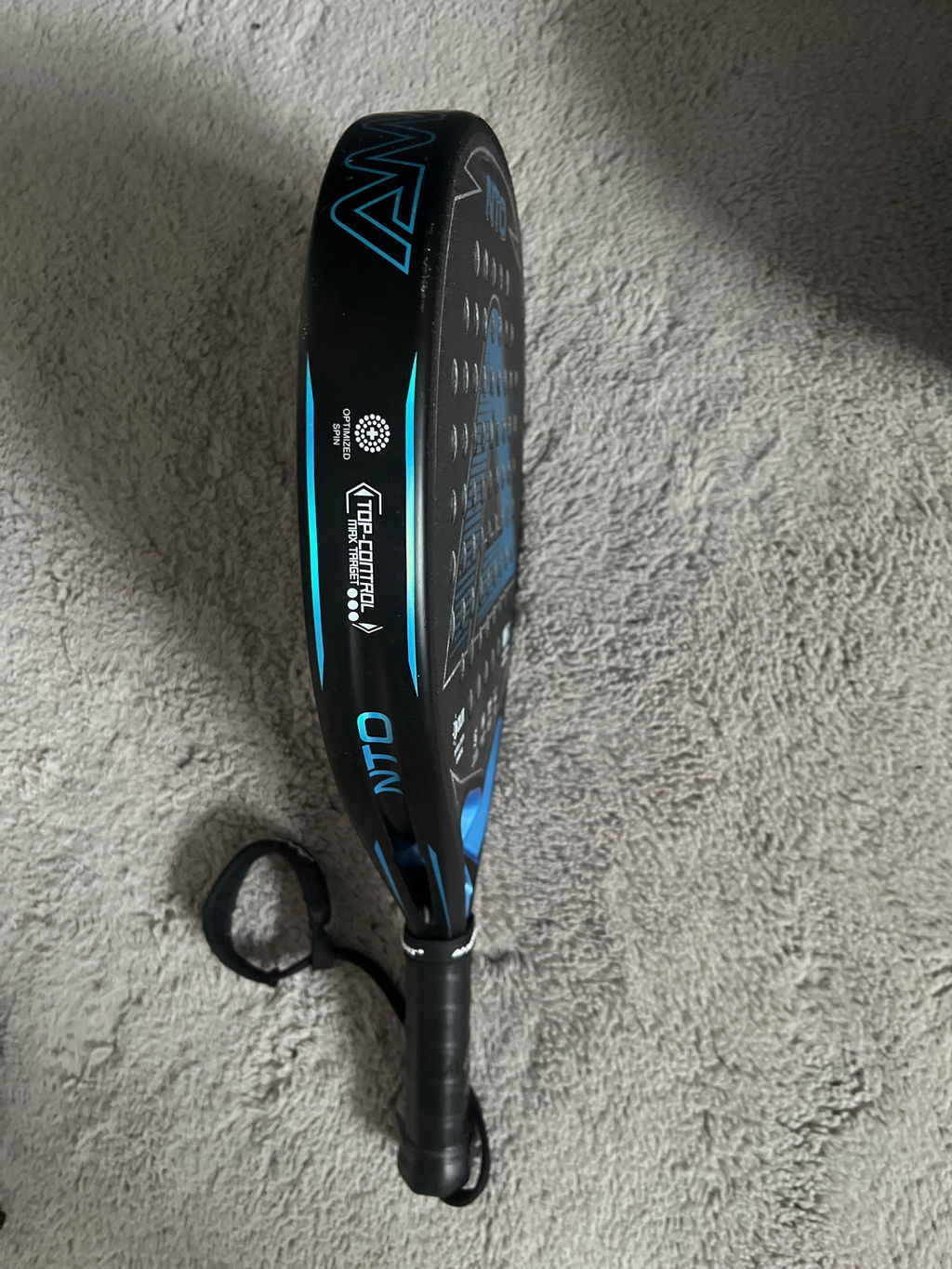
The grip tape matches the pictures with a grey background. Some photos on court show a different grip tape.
Frequently asked questions
Is the Arctic NTO Blue suitable for beginners?
Not as a very first racket, because the diamond shape puts the sweet spot high up. If you have played for a few months, the core (medium) is easy to get on with.
Is the Arctic NTO Blue soft or hard?
Medium. The core (Multi-EVA) combines feel with noticeably more pace than a soft core.
How long does a racket last?
At one or two sessions a week, roughly twelve to eighteen months. The core loses elasticity over time, so power and control drop off. If you play more often, you'll replace it sooner.
Do rackets break easily?
Cracks can appear from hitting the fence or the ground. A protector guards the frame against exactly that. Against normal play, good carbon is tough.
Can I try a racket first?
Yes. You book a model for fourteen days, pay €14 in rent and leave the value of the racket as a deposit. When it comes back, the deposit is refunded in full. It's all set out on the rental rackets page.




How we check reviews
Reviews marked “Verified” come from confirmed NextServes customers. For reviews without this label, we cannot check whether the person bought the product from us.